Speaker's Highlight
Data, Detection & Decisions
About the Speaker
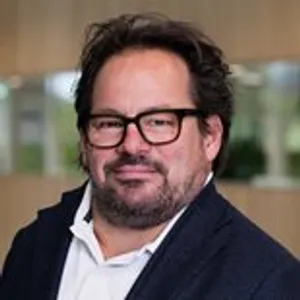
Bas Loomans is the Professor of Oral Function and Restorative Dentistry at Radboud university medical center, where he bridges the gap between scientific innovation and clinical practice. He specializes in treating severe tooth wear and founded the Radboud Tooth Wear Project in 2010 to integrate patient care, research, and education. His commitment to minimally invasive techniques and preserving oral function has earned him the IADR Steve Bayne Mid-Career Award.
Prof. Loomans prioritizes patient-centered, affordable care over purely technical solutions. His current research focuses on digitizing dentistry, using Artificial Intelligence (AI) and 3D imaging to objectively assess teeth and support treatment planning. By connecting lab research with clinical studies, he aims to modernize dental check-ups and improve the quality of life for high-risk patients.
Abstract
Periodic dental examinations are traditionally based on visual inspection and clinical interpretation by the oral healthcare professional. Although this approach forms the foundation of preventive dental care, the assessment of early changes in teeth and restorations (fillings/crowns) often remains subjective and strongly dependent on the experience of the individual clinician. As a result, subtle progression of disease, restoration failure, tooth wear and periodontic issues may remain undetected until more advanced stages.
The integration of artificial intelligence (AI) with 2D and 3D radiographs and intraoral scanning is creating new opportunities for diagnostics, clinical decision-making, and longitudinal monitoring in restorative dentistry. Contemporary intraoral scanners provide highly detailed and reproducible 3D representations of the dentition and restorations. When combined with AI-based analytical algorithms, these digital datasets can support more objective, standardized, and reliable clinical assessments. The integration of AI into routine dental care has the potential to fundamentally change the periodic dental examination: from a subjective momentary assessment toward a continuously monitored, data-driven care process. Emerging applications include automated chart filling, AI-assisted detection of pathological changes, standardized evaluation of restorations, and longitudinal monitoring of dental structures over time. Such approaches may enable clinicians to detect subtle morphological changes at an earlier stage, improve the consistency of periodic dental examinations, and reduce inter- and intra-operator variability. Furthermore, digital monitoring may facilitate more personalized and evidence-based recall and dental treatment strategies.