Speaker's Highlight
Current and Future Applications of XR and AI in Dentistry
About the Speaker
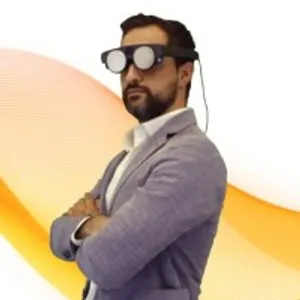
Roberto Mangano is a distinguished expert in the field of digital technologies, with a particular emphasis on Augmented, Virtual, and Mixed Reality. He earned his Master's Degree in Computer Engineering from Politecnico di Milano University. For the past ten years, Roberto has been working on edge technologies, especially with focus on Mixed Reality and Computer Vision.
Roberto is one of the inventors of ObiScanner, a product of extensive research in Human-Computer Interaction and Computer Vision designed in conjunction with the scientifical support of the Digital Dentistry Society. Additionally, he co-invented HoloDentist, the pioneering Mixed Reality collaboration solution for Dentistry.
As a committed member and speaker of the Digital Dentistry Society, Roberto has been sharing his expertise on digital technologies around the globe since 2017. His contributions to the field are also reflected in his co-authorship of peer-reviewed articles, including those published on BMC Oral Health and the Journal of Dentistry.
Abstract
Extended Reality (XR) and Artificial Intelligence (AI) are rapidly reshaping dentistry, enabling a shift toward fully digital, data-driven, and patient-centric workflows. This lecture provides an overview of the core technologies underpinning this transformation, including face scanning, computer vision, and machine learning, and explains how they are integrated into contemporary digital dental workflows. Particular attention is given to facial data acquisition and its role in diagnosis, treatment planning, and interdisciplinary communication, highlighting how AI-powered tools enhance accuracy, predictability, and clinical decision-making.
The session further explores the role of XR technologies—Augmented, Virtual, and Mixed Reality—in empowering collaboration, education, and clinical practice. Through practical demonstrations and hands-on interaction with AR and VR headsets, participants will experience how immersive technologies support treatment planning, professional training, patient communication, and emerging applications such as dynamic navigation. The lecture concludes with a forward-looking perspective on the future of XR and AI in dentistry, outlining opportunities for innovation in education, clinical workflows, and collaborative care models.